


What Really Makes a Great Espresso - Barista's Notes #2

What makes a great espresso?
It might be tempting to think the answer is simple. Use an expensive espresso machine, pull the same amount of espresso every time, serve it immediately, and the result should always taste the same.
But espresso does not quite work that way.
While an espresso machine is an important tool, great espresso depends on much more than the equipment alone. The coffee beans, grind size, dose, brew ratio, extraction, barista technique, and even the temperature of the finished espresso can all influence the final flavor.
In the second edition of Barista’s Notes, DOTE takes a closer look at four common espresso myths and the facts behind them. These misconceptions reveal an important part of coffee brewing: consistency does not necessarily mean making every espresso identical. Instead, it means understanding the coffee and making the right brewing decisions to bring out its best qualities.
Myth: Espresso Machines Guarantee Perfect Espresso
Fact: Even the best espresso machines rely on proper dialing in and barista technique to produce great espresso.

An espresso machine can provide the technology needed to brew espresso, but the machine itself does not guarantee a perfect shot.
Think of an espresso machine as a tool. It can provide the pressure, temperature, and water needed for espresso extraction, but someone still needs to determine how the coffee should be prepared.
This is where dialing in espresso comes in.

Dialing in is the process of adjusting the coffee recipe and brewing variables to achieve a balanced and desirable flavor. A barista may adjust the grind size, coffee dose, extraction time, and brew ratio depending on how the espresso tastes.
For example, if an espresso tastes too bitter or dry, the barista may need to adjust the extraction. If it tastes overly sour or lacks sweetness, other variables may need to be changed.
The same espresso machine can therefore produce very different results depending on how it is operated.
Why Barista Technique Matters
Preparing espresso involves more than simply pressing a button.
Proper barista technique can include:
Grinding the coffee to the appropriate size
Measuring the correct coffee dose
Distributing the grounds evenly
Tamping consistently
Managing the espresso recipe
Monitoring extraction time and yield
Tasting the finished espresso
Adjusting the recipe when necessary
Even with high-quality equipment, these details can make a significant difference.
The Takeaway
An espresso machine is an important part of the brewing process, but it is not a substitute for coffee knowledge and technique. Great espresso comes from the relationship between the equipment, the coffee, the recipe, and the person preparing it.
Myth: Espresso Should Always Have the Same Volume
Fact: Espresso recipes can use different brew ratios depending on the coffee and desired flavor.

There is a common assumption that an espresso shot should always fill the same amount in a cup.
However, espresso volume alone does not tell the whole story.
Baristas often use a brew ratio to describe the relationship between the amount of dry coffee used and the amount of espresso produced.
For example, a recipe might use 18 grams of ground coffee and produce 36 grams of espresso. This would be a 1:2 brew ratio.
But that does not mean every coffee should always be brewed at exactly 1:2.
Different coffee beans can respond differently to extraction. A barista may adjust the brew ratio to help highlight certain characteristics of the coffee.

A particular coffee may benefit from a different ratio that emphasizes sweetness, body, acidity, clarity, or other desirable qualities.
This is why espresso recipes are not necessarily one-size-fits-all.
Volume vs. Weight in Espresso
Another reason volume can be misleading is that espresso contains crema, the layer of foam-like bubbles that forms on the surface of a freshly extracted shot.
For this reason, baristas commonly use weight when measuring espresso yield rather than relying only on the volume in the cup.
The Takeaway
There is no universal volume that every espresso shot must have. Brew ratios and espresso recipes can be adjusted according to the coffee, extraction, and flavor profile a barista wants to achieve.
Myth: Espresso Should Be Served Immediately or It's Ruined
Fact: Espresso changes as it cools and can reveal different flavors over time.
Freshly brewed espresso is hot, aromatic, and full of intensity. This is one reason espresso is often served immediately after extraction.
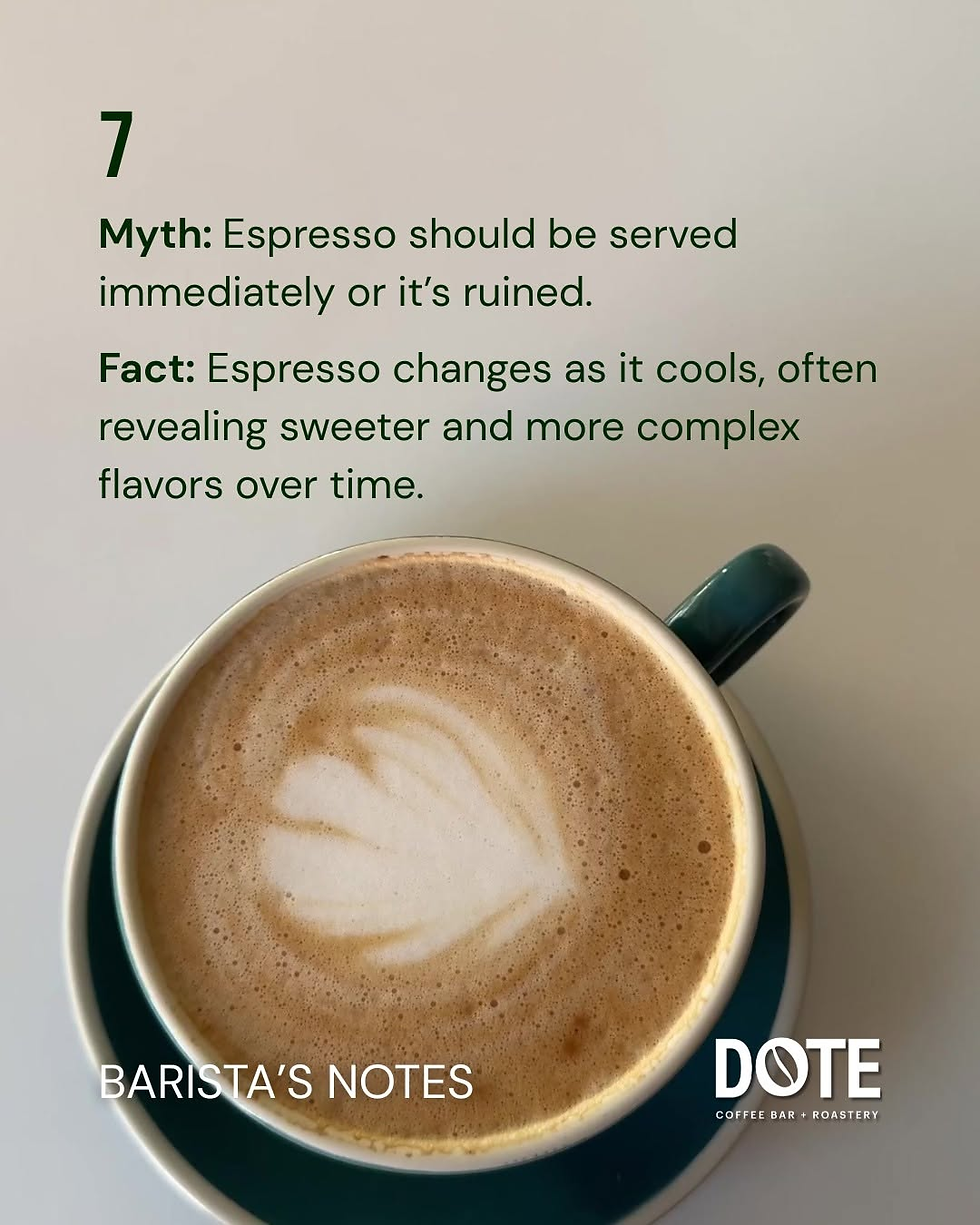
But does that mean an espresso becomes “ruined” the moment it begins to cool?
Not at all. Like many foods and beverages, coffee changes as its temperature changes.

When espresso is extremely hot, some of its flavors can be difficult to distinguish. As the temperature decreases, different characteristics may become easier to perceive.
A shot that initially seems intense or bitter may reveal more sweetness, acidity, aroma, or complexity as it cools.
This does not mean that espresso should be left sitting for a long time. Espresso is still best enjoyed while its aromas and flavors are fresh. However, allowing it to cool slightly can be part of the tasting experience.
Why Temperature Changes Espresso Flavor
This is particularly interesting when tasting specialty coffee because the coffee may reveal different characteristics at different temperatures.
You might initially notice a rich, intense flavor, followed by sweeter or fruitier notes as the espresso cools.
In other words, espresso is not necessarily a single flavor experience from the first sip to the last.
The Takeaway
Freshness matters, but cooling does not automatically ruin espresso. In fact, allowing espresso to cool slightly can help reveal sweeter, brighter, and more complex flavors that may be harder to notice when the shot is extremely hot.
Myth: Every Espresso Shot Tastes the Same
Fact: Espresso flavor changes depending on the beans, roast, grind size, dose, brew ratio, and extraction.

Even when espresso is prepared using the same machine, it does not mean every shot will taste identical.

The Coffee Beans
Different coffee beans have different characteristics depending on factors such as origin, variety, processing method, and growing conditions.
One coffee may have chocolate and nutty characteristics, while another may have fruity, floral, or citrus-like notes.
The Roast Level
The roast profile also influences espresso flavor.
Different roast levels can bring out different characteristics in coffee. Some coffees may emphasize brighter acidity and fruit-like flavors, while others may develop deeper, richer, and more roasted characteristics.
The Grind Size
The size of the coffee grounds influences how water moves through the coffee during espresso extraction.
A change in grind size can therefore affect extraction speed and flavor. This is one of the reasons baristas adjust the grinder when dialing in espresso.
The Dose and Brew Ratio
The amount of ground coffee used and the amount of espresso produced can influence the strength, body, and balance of the drink.
Changing the brew ratio can change how the characteristics of the coffee are expressed in the cup.
The Extraction
Ultimately, all of these variables come together during espresso extraction.
The goal is not simply to extract coffee as quickly or slowly as possible. It is to find a recipe that brings out the desirable characteristics of the coffee while maintaining balance.
The Takeaway
Every espresso shot has the potential to be different. Coffee beans, roast level, grind size, dose, brew ratio, extraction, and barista technique all contribute to the final espresso flavor.
The Bigger Picture: Great Espresso Is a Moving Target
These four myths reveal something important about espresso: there is no single machine setting, volume, temperature, or recipe that automatically creates perfect espresso.
A high-quality espresso machine can provide excellent equipment, but the coffee still needs to be dialed in. A shot does not have to reach one universal volume because different coffees can benefit from different brew ratios. Espresso does not instantly become bad as it cools, and every shot can taste different depending on the variables involved.
In many ways, this is what makes espresso such an interesting part of coffee culture.
The goal is not necessarily to make every coffee taste exactly the same. The goal is to understand the coffee well enough to bring out its best characteristics.
A skilled barista considers the coffee in front of them and adjusts the brewing process accordingly. The result is an espresso that reflects both the character of the beans and the care that goes into preparing them.

Quality Starts Before the Espresso Reaches the Cup
At DOTE Coffee Bar + Roastery, we believe that great coffee starts with understanding what goes into every beverage. Quality is not simply about having an espresso machine or following a fixed recipe. It is about paying attention to the coffee beans, the brewing process, the extraction, and the details that ultimately shape what you taste.
Through Barista’s Notes, DOTE aims to make coffee education more approachable for both coffee enthusiasts and anyone who simply wants to know more about what is in their cup. We care about sharing the knowledge behind our beverages because we believe that when you understand the craft behind your coffee, you can appreciate its quality even more.
For DOTE, every beverage is an opportunity to serve something thoughtfully prepared, while every cup is an opportunity to learn something new.
Because every great cup starts with knowing your coffee.


Comments